Exercise: Past, Present & FUTURE (Part 2)
 |
The exercises designed to address curves exceeding 25° are often rooted in traditional practices and differ based on the specific method applied. In the Lyon Method, these exercises typically complement the use of a brace.
|
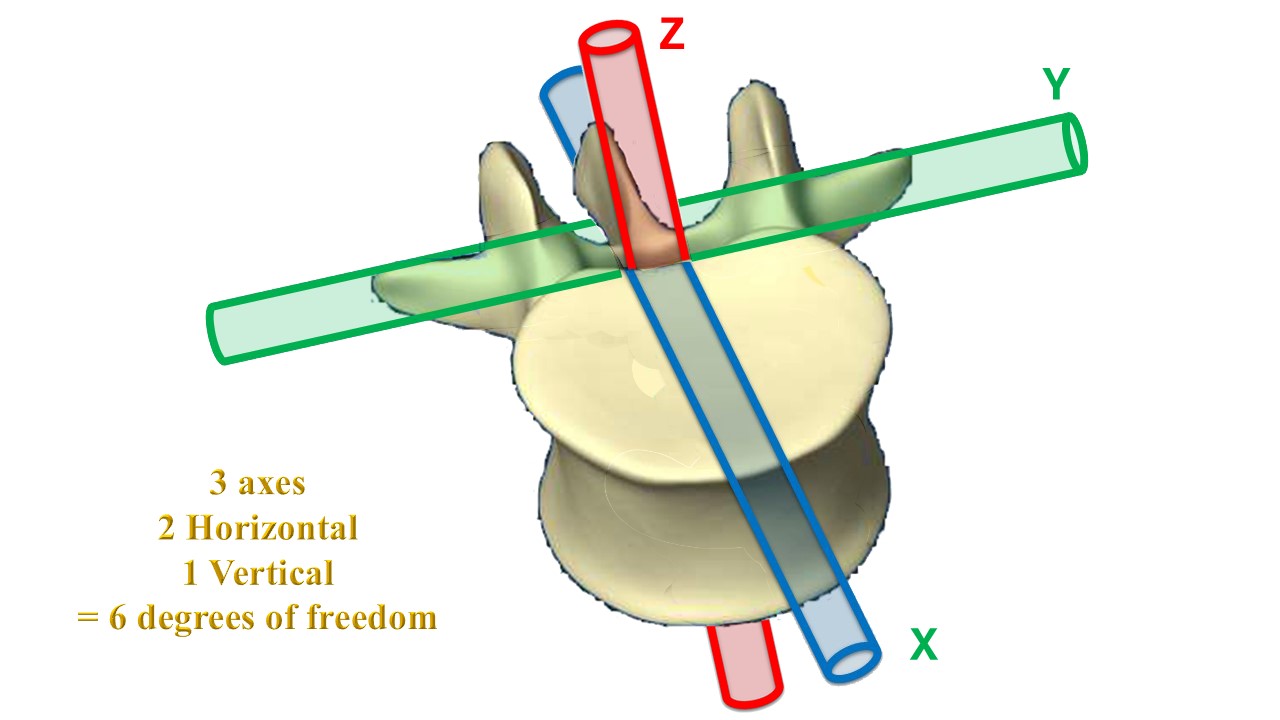 |
The movement between two vertebrae takes place along 3 axes: 2 horizontal; transverse (joining the transverse processes) and sagittal (in the axis of the spinous process) and 1 vertical (in the axis of the spinal cord), The intervertebral movement therefore has 6 degrees of freedom at each of the 17 thoracic and lumbar levels . |
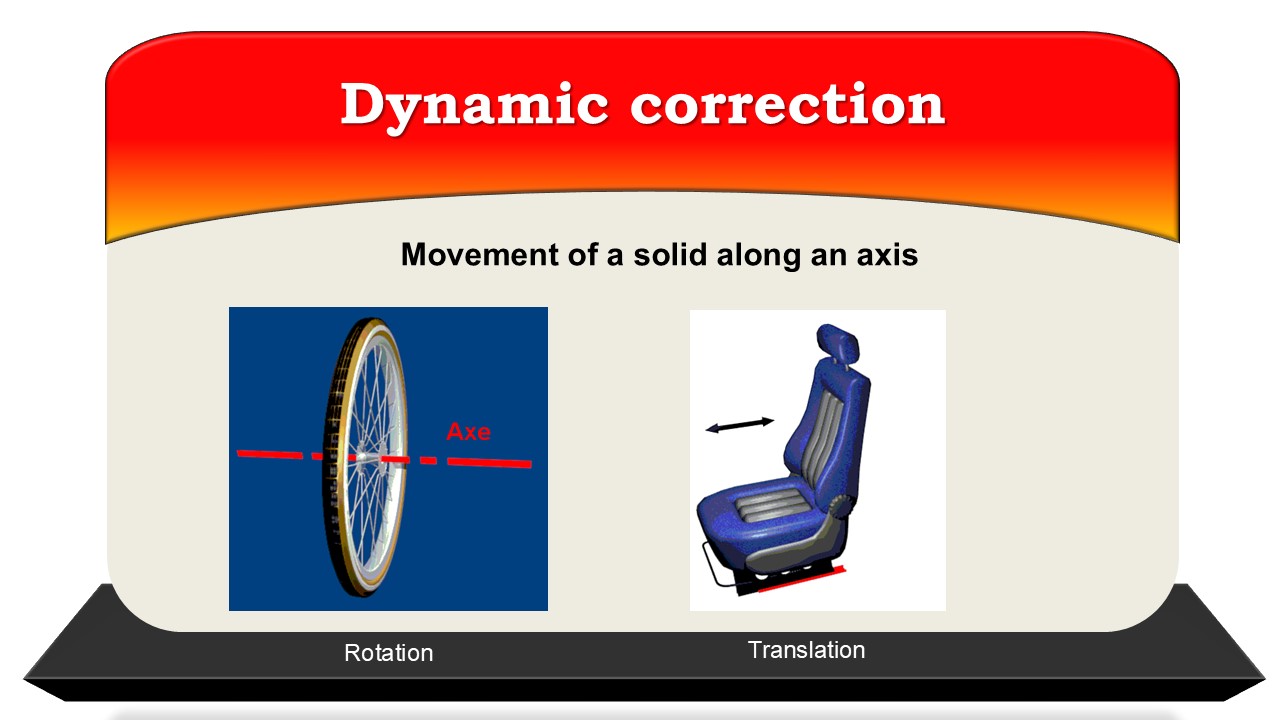 |
Around an axis, only two movements are possible: rotation and translation. |
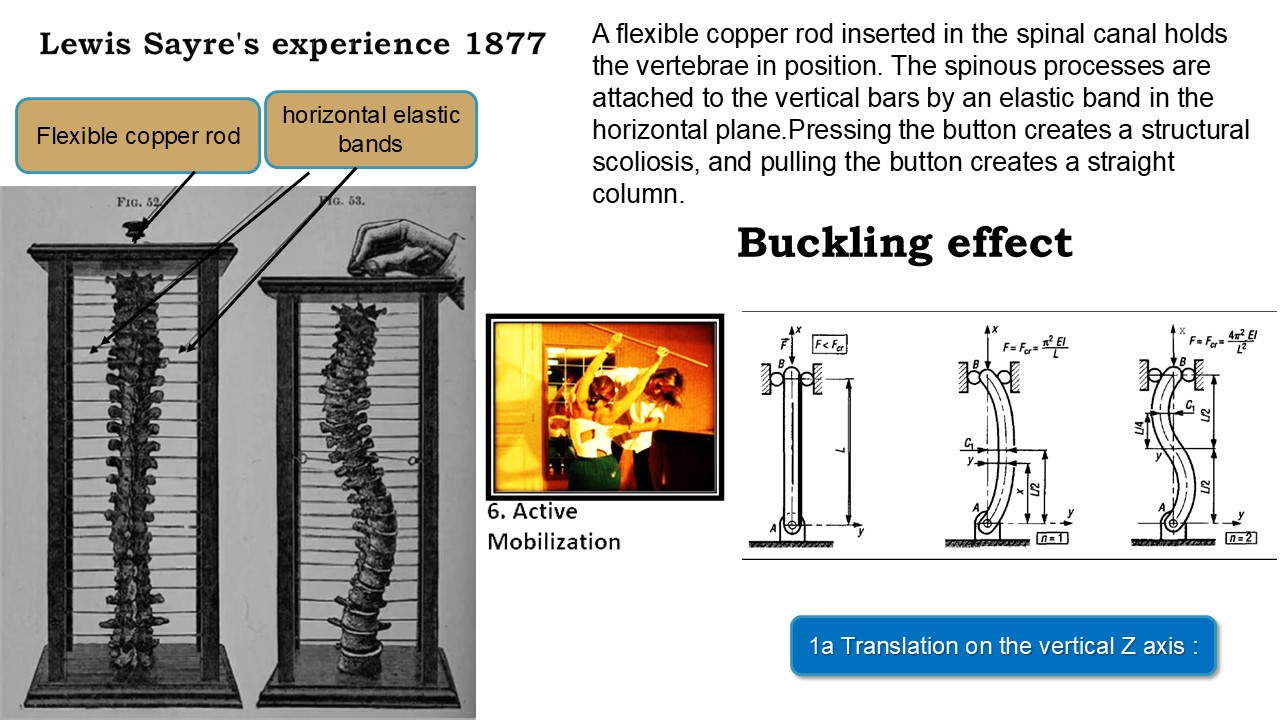 |
originates from 1877. In his method, a bendable copper rod is placed into the spinal canal, acting as a central axis to maintain the alignment of the vertebrae. The spinous processes are secured to the sides with a rubber band in the horizontal plane. When the button is pressed, it induces a structural scoliosis, while pulling the button restores a straight spinal column. Thus, the horizontal plane and vertical axis are crucial in forming and correcting scoliosis. |
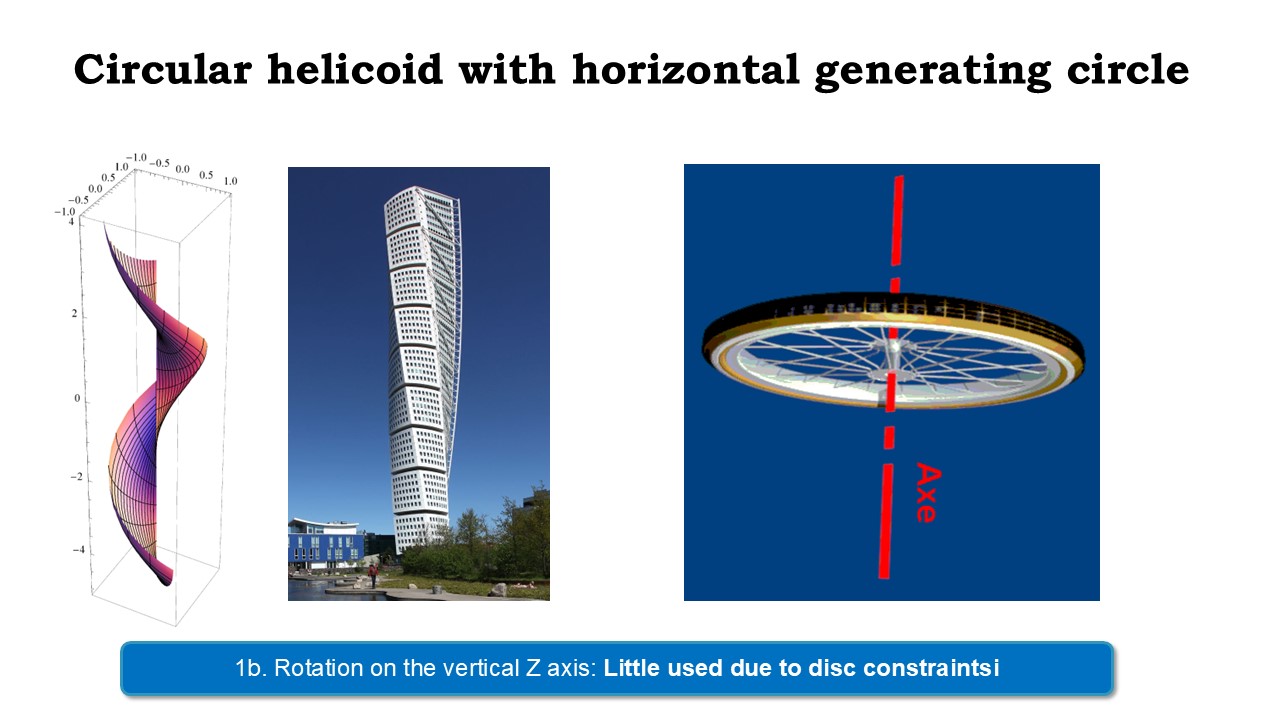 |
Scoliosis can be mathematically described as a spiral torso column, essentially a helicoid with a horizontal generating circle. This helicoidal motion involves a part or object moving along a fixed axis while rotating around it. In this scenario, rotational and translational movements are integrated. The Lyon Method minimizes the use of direct derotation to avoid putting excessive load on the intervertebral disc. |
 |
For the Lyon Method, the trunk is modeled as a three-axis hyperboloid. If scoliosis exhibits two curves, then two hyperboloids are utilized. Here, the intersection of the anterior and posterior median muscle chains at the base of the thorax and the thoracolumbar region serves as a fixed point. |
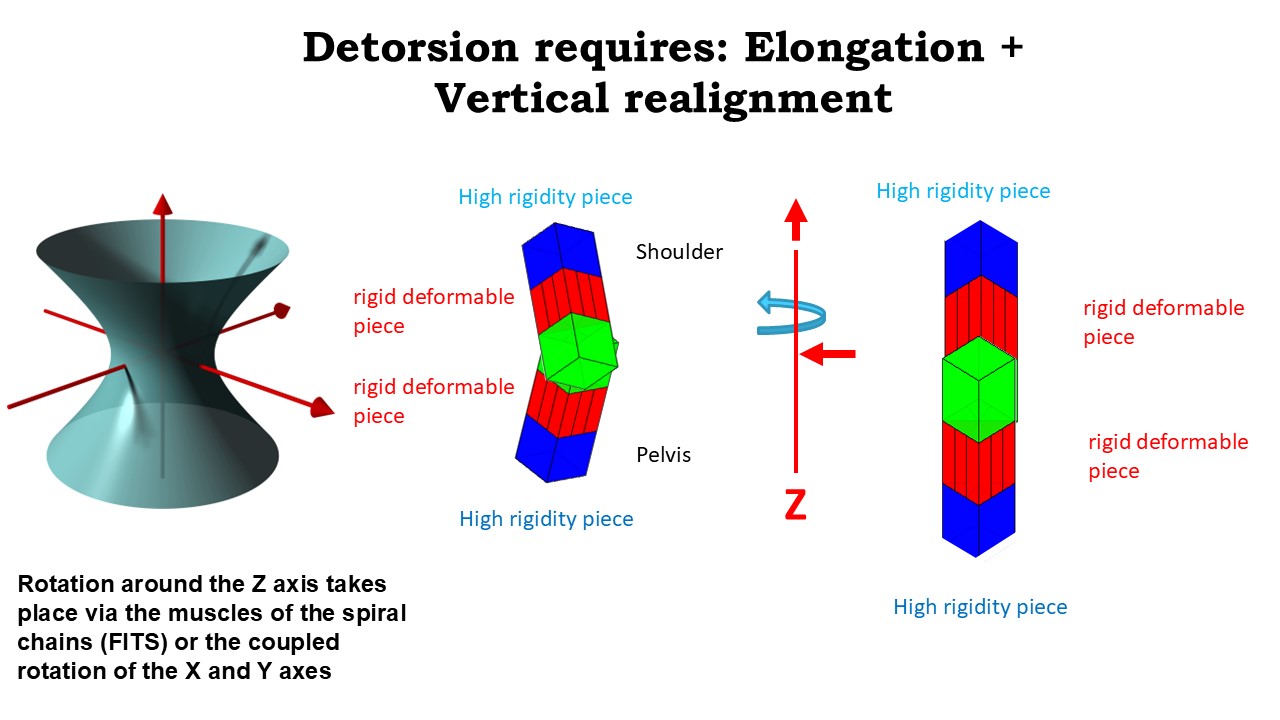 |
This is why the Lyon method, since the advent of EOS and volume moulding, prefers to use solid geometry. The vocabulary changes with the volumetric concept. Currently, derotation in the horizontal plane is replaced by detorsion. The axial self-elongation becomes the geometrical detorsion. |
 |
The concept of mechanical detorsion is linked to coupled movements of the spine. The combination of sagittal isostatic balance, frontal correction by bending or shifting, and bringing the vertebral bodies closer to the vertebral axis by the “mayonnaise tube effect” automatically generates mechanical detorsion. The description of the object in our 3 dimensional space precedes the step of measuring this object. |
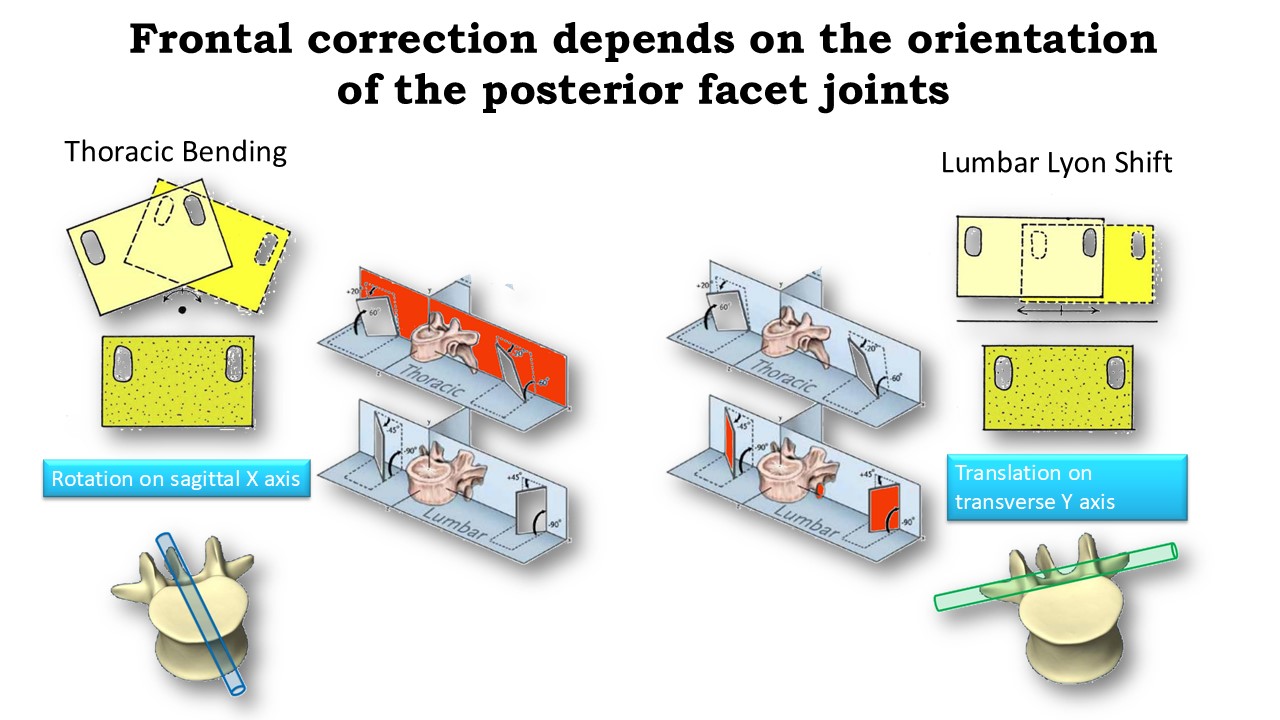 |
Mechanical detorsion and derotation are conditioned by the orientation of the posterior joints. In the Lyon method, at the thoracic level, it is a rotation around the sagittal horizontal axis or "bending". At the lumbar level, it is a translation along the horizontal transverse axis or "shift". In the absence of associated axial elongation, some schools also propose the shift at the thoracic level.
|
 |
In the production of the ARTbrace brace, three scans are essential for the reconstruction of corrections: the initial scan focuses on geometric detorsion, while the subsequent second and third scans are dedicated to mechanical detorsion targeting the lumbar and thoracic areas.
|
 |
Exercise number 7 of the Lyon Method executes mechanical lumbar detorsion while simultaneously managing both the lumbar lordosis and the frontal translation shift. Within the brace, the iliac plateau and the concave wall exert a push-up and lifting effect. |
 |
Involving the thoracic region, the eighth exercise integrates both physiological kyphosis and frontal plane flexion. Once the thoracic spine is set in a kyphotic position using the stick, the patient actively executes the bending motion in the frontal plane. This process represents a genuine mechanical detorsion, which merges sagittal and frontal corrections. Distinct from other techniques, the head consistently maintains its alignment with the gravitational line, and the semicircular canals remain level. |
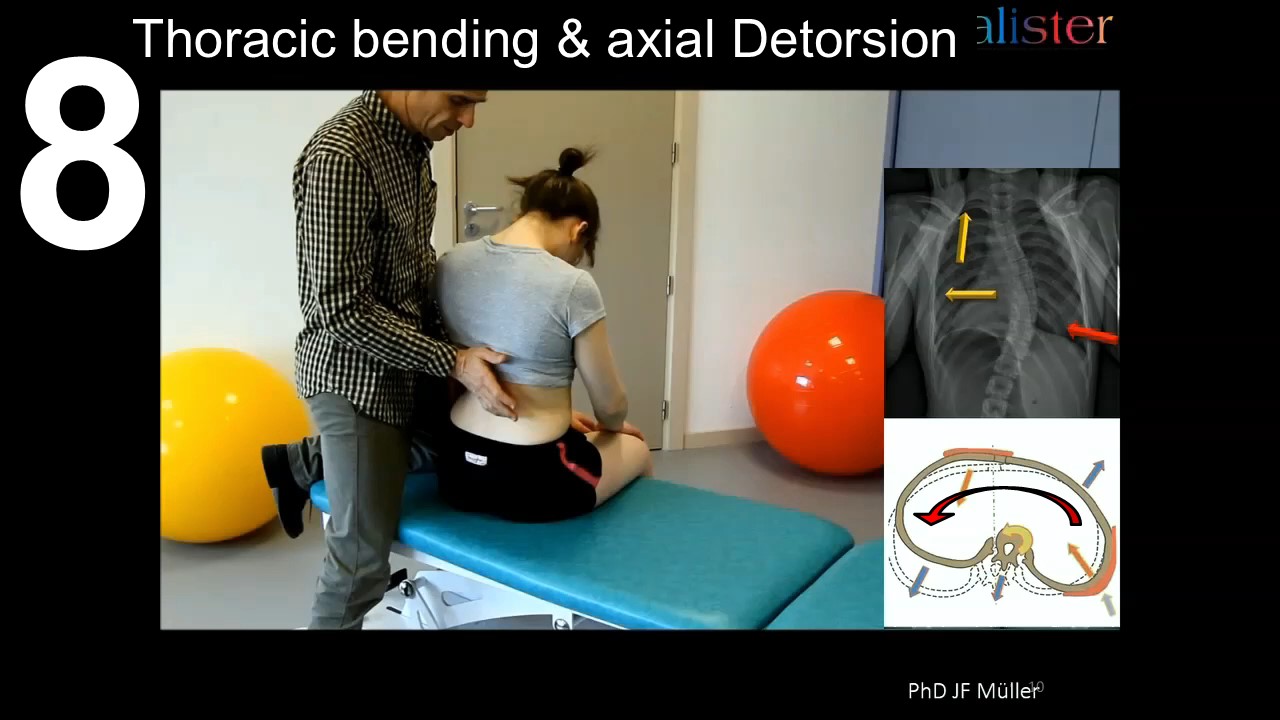 |
In the event of significant rigidity, active work is complemented by passive mobilization in thoracic kyphosis, followed by frontal bending. Mobilization can also be completed with axial detorsion. |
 |
In the case of a significant flat back, priority is given to kyphosis. The concave upper limb is used for concave derotation, while the convex upper limb is used for corrective bending. |
 |
Dynamic corrections are performed following the guidelines of static correction, specifically overseeing the alignment in both the frontal and sagittal dimensions. |
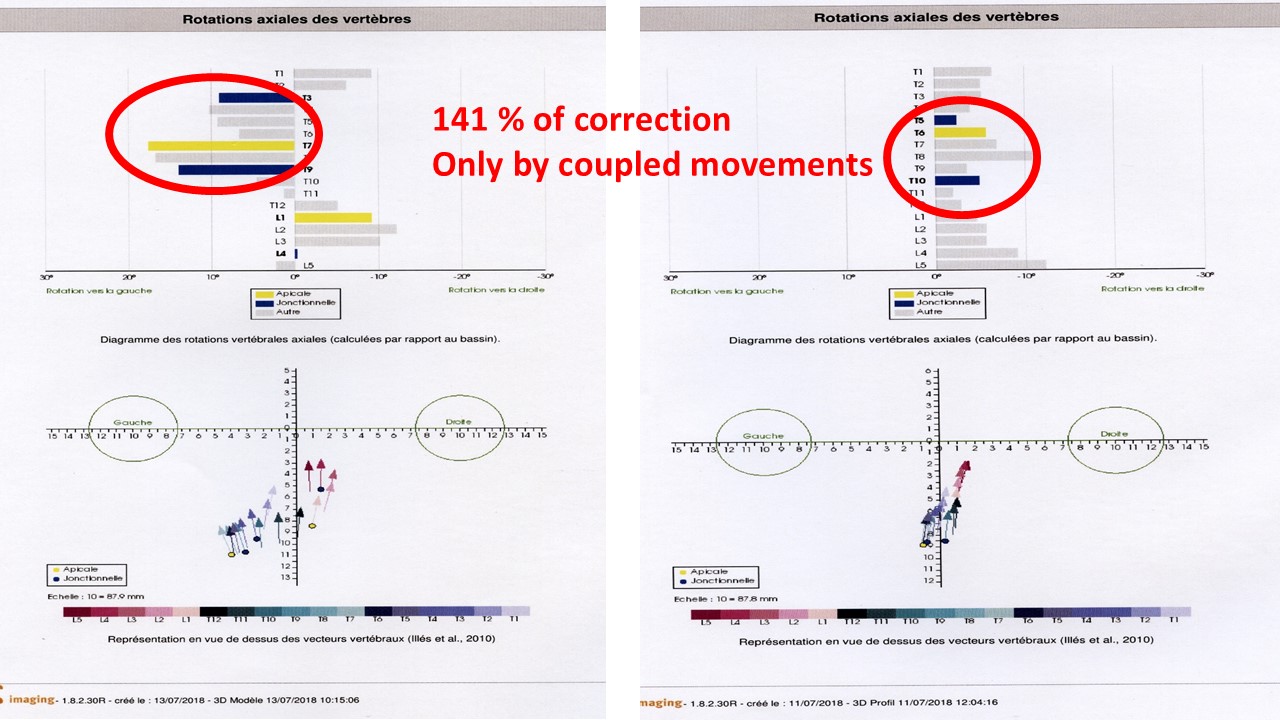 |
The adjustments of the torso in both the sagittal and frontal planes also help to align the horizontal plane while minimizing the risk of excessively stressing the intervertebral disc. |
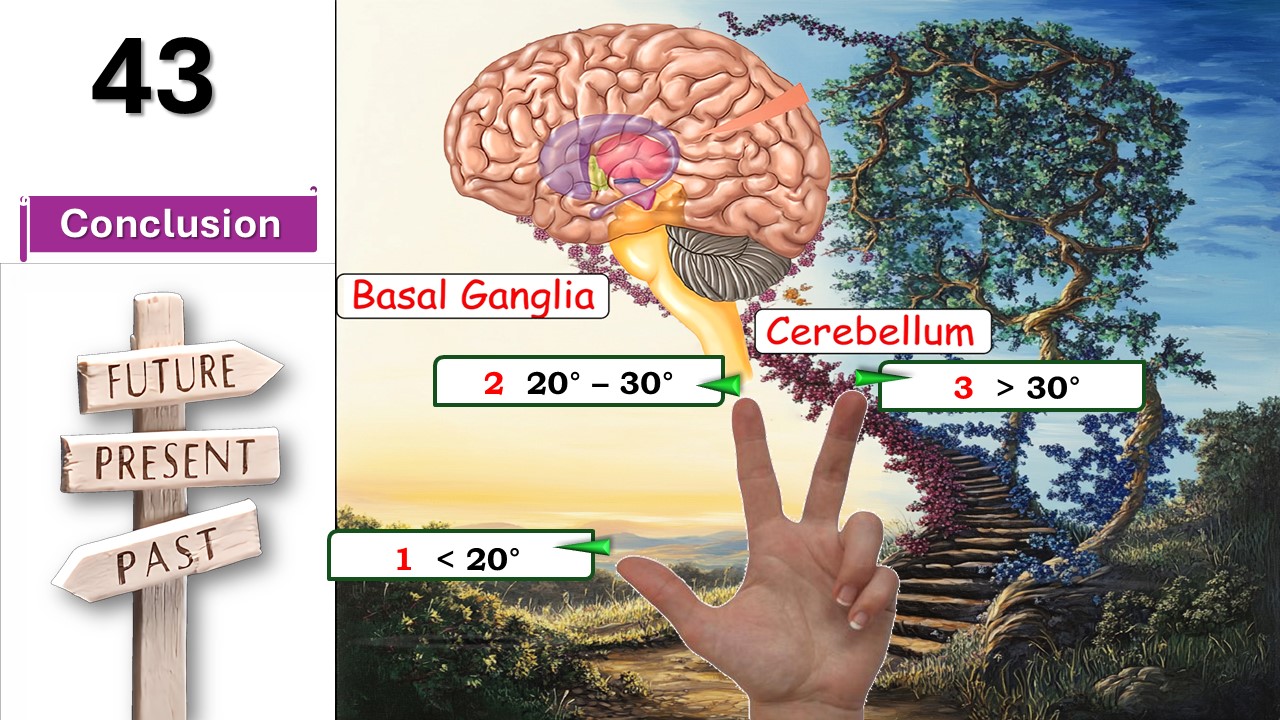 |
Currently, we possess all the essential components for a more effective physiotherapy approach. When the temperature is below 20°, the exercises focus on stimulating the extrapyramidal system, adhering to the maturation stages in children. For temperatures ranging between 20° and 30°, correction is primarily applied to the intervertebral disc. If the temperature exceeds 30°, the exercises are designed to address vertebral deformation. |
